Confessions of a researchaholic

2013-01-27

漸漸

Filed under: Imaginary,Real — liyiwei @ 1:06 am
Tags:

【侯 文詠】漸漸

最近有個餐飲界的病人和我大談經營理念,談著談著我忽然豁然開朗。原來這個人經營的是色情酒店。不但如此,他得意地自誇旗下女將清一色是大專程度以上。知識份子怎麼會去從事色情陪酒行業?!我們不免好奇十足。

「其實很簡單,我刊登廣告,徵求大專程度以上的女性會計。凡是應徵者都必須檢具學歷證書。」

「你刊登不實廣告,誘騙應徵少女。」他神秘地笑:「我們的會計薪水是比別人高沒錯。不過每個小姐一來我都說得很清楚。我們這裡的確有色情陪酒。但是領會計的薪水絕對只能做會計的工作。和裡面陪酒的小姐完全不同。絕不強迫。」

「那 就領薪水,好好地做個會計。」我問。

「是做會計沒錯。不過日子久了,和裡面端盤子的小姐熟了,大家都一樣是大專畢業的,好溝通。忙不過來的時候幫忙端個盤子,送送酒,也是常有的事。這個時候我就告訴小姐;你看,當會計領一萬二千元,端盤子送酒薪水二萬四,端盤子又不陪客人,不是什麼壞事,反正你都常常端盤子,為什麼不乾脆領二萬四?」

「這樣說個幾次就開始動搖了。同樣都是工作,為什麼不領二萬四呢?俱樂部的規定是,端盤子的小姐不准坐下來陪客人喝酒,這樣和坐檯小姐才有區別。可是日子久了,客人熟了,也會意思意思要求喝杯酒。開頭總是不願意,後來熬不過就喝一杯。說是站著喝。」

「一開始喝酒就好辦了。站著喝酒薪水是二萬四,坐著喝是四萬八,客人給的小費還不包括在內。同樣都是大專畢業,為 什麼錢賺的比別人少?!就會有人勸她了,人都在裡面了,外面的人誰知道你是端盤子,還是坐檯呢?!再說自己真的清白,別跟客人出場就好了,陪客人喝酒,就算在社會上交際應酬也是常有的事。」

「於是坐下來當坐檯小姐。剛開始一定規規矩矩地喝酒。也不隨便跟客人出場。這一行競爭大,領四萬八慢慢就會嫌不夠了。只 好挑看得順眼的客人給帶出場了。作久了,總是會給厲害的客人佔便宜,哭哭啼啼鬧一陣子也就好了。畢竟讀過書,狠下心來做得更利落、更敢,客人喜歡,我也得意,這是兩廂情願的事。」

他停了一下又說:「我從來沒有強迫過別人,也從來不擔心找不到小姐,反正這個環境慢慢會改變她們,直到她們根本忘記自己原來的想法和樣子!!」

我愈聽眼睛睜得愈大,從不曾想過在這樣不疾不徐的瑣碎裡,竟也有血肉飛濺似的驚心動魄。豐子愷寫過文章感嘆:使人生圓滑進行的微妙要素,莫如「漸」;造物主騙人的手段,也莫如「漸」。

在不知不覺中,天真浪漫的孩子「漸漸」變成野心勃勃的青年。慷慨豪俠的青年「漸漸」變成冷酷的成人;血氣旺盛的成人「漸漸」變成頑固的老頭子!!

對時間的感嘆,本是人類共同的命運,儘管悲傷,大自然不變的法則是誰都沒話說的事。可是對於意識形態,價值之漸,卻叫人坐立不安。

原來是錯的事,為什麼「漸漸」變成對的事??原本可恥的事,為什麼又「漸漸」人人爭相追逐??整個臺北市翻翻補補,敲敲打打,還有政治風暴、金融危機、社會秩序動盪,彷彿整個城市快傾毀了,可是這時代更叫人無法忍受的卻是那種無聲無息,無法感受的(漸),扭曲意識形態,把人的尊嚴、我們活著僅仰賴的那一點感覺吃掉。

無從捉摸,無法抵擋的墮落與沉淪。 漸漸之可怕,在於我們的不知不覺。世界上沒有任何東西是永遠不變的,唯一不變的只有一件事,就是任何東西都在變!

2013-01-26

Why my site is not worth hacking

Filed under: Real — liyiwei @ 7:49 pm
Tags: ,

A friend of mine, who is currently a grad student in a prestigious CS department, told me that his PhD adviser is pretty keen on the cyber security thing. Like, he will fuss about unencrypted project servers.

I do not encrypt my server. It is not nearly as popular a target as my friend’s department, and I simply do not think it is worth hacking. Allow me to do a quick breakdown of the content of my site:

90% are project ideas killed by myself.

9% are not killed, but papers rejected by reviewers.

1% are neither killed nor rejected, but so poorly written that reviewers, who are experts in my field, asked for 3 revisions to be able to understand.

I hope I have saved your time. Have a good day.

2013-01-25

The teacher is responsible for engaging the class

Filed under: Real — liyiwei @ 7:24 pm
Tags:

When students start to chat to each other during the class, they are either surprised by something (e.g. announcement a heavy homework assignment) or they are losing interests in the lecture.

The latter happened to me on the first class of this semester. I forgot to eat lunch before the lecture, so my mojo was fading halfway through. And the students sensed this.

I did ask them to quiet down because other students complained about the disturbance. But later on I realized I should never have to ask anyone to quiet down if I had not sucked.

So, in the second lecture of the class, I made sure I eat enough lunch to maintain my mojo. And I performed some live demos to support the lectures. No chitchat this time, and I know I got their attention.

Teaching

Filed under: Real — liyiwei @ 7:23 pm
Tags: , ,

My attitude towards teaching could be reflected by how I would really like to write my teaching statement (for faculty job applications).
There will be only one sentence: “smart enough students can pick up everything themselves”.
(Note1: I know this is entirely doable because I pulled this off since I was 10 years old, and I did not consider myself to be very smart.)
(Note2: Of course this is not how I really wrote my teaching statement.)

With this backdrop, it should not be a surprise that I have never blogged a single entry about teaching, at least not mine. I do not even have teaching as a tag word.

I have considered teaching as a chore rather than enjoyment (unlike research), and my basic stance has not changed too much. (One main reason why I think it is better to start a research career as an industry lab scientist rather than a university professor.) But not until I really taught full-semester classes, especially large ones, did I start to appreciate teaching can be a fun thing to do, for two main reasons.

First, it can actually inspire my research ideas.

Second, and probably more important, teaching provides a great chance for massive mind reading and human studying, with moral justification for effective teaching. It is even more fun and challenging than reading individuals, one of my most favorite pastimes.

More posts to follow.

2013-01-07

Sharing code and data

Filed under: Real — liyiwei @ 1:08 am
Tags: ,

It is usually a very good idea to share the code and data along with our published papers. This will make it easier for others to test, understand, reproduce, and compare against our methods, which in turn can make us more popular, our papers more widely cited, and our technology more likely to be adopted by the industry and turned into real products.
Code and data repositories are also an important part of evaluating job applications.

(I have open sourced most of my first/single-authored projects, except my first 2 SIGGRAPH papers for which I could no longer find the code in the school server, which I greatly regret.)

Ideally the code should be in high quality, but even if not, sharing it can let others have a chance to improve the code (and motivate us to write good code).
It is fair to say that the code and data are no less important than the paper.

Some things to watch out for include institutional and legal constraints, such as trade secrets, copyrights, and patents, and not yet published future ideas.
These can be planned and managed via different git branches (e.g., a public branch that is gradually merged from a private branch).

2012-12-31

How to design demos

Filed under: Real — liyiwei @ 9:51 pm
Tags: ,

In a nutshell, a demo should properly demonstrate technical aspects with sufficient artistic appeals.

The technical part is usually more important, and can suffice alone for many science and engineering disciplines. However, the artistic part is also very important for graphics and HCI, or any fields which involve direct human perception and consumption.

Demos usually take a lot of time and efforts, on top of the usual workload in ideation, writing, algorithm, implementation, and experimentation. And whether you like it or not, a solid and novel algorithm cannot be adequately assessed or appreciated by the readers if it is not demonstrated through proper demos.

Thus, designing demos is kind of an art. Below are recent suggestions from Sylvain Lefebvre which I have found to be excellent.


A guideline that worked fine for me is to consider whether 1) the result demonstrates the technique properly and 2) the result looks just good enough that it appears useful; in particular we want to avoid people think that the example is contrived to only show the advantage of our approach.

The problem is that 1) and 2) sometimes compete with each other (e.g. a fantastic rendering possibly making it hard to properly see the motion, etc.). Also we do not want to spend too much time on 2), only enough that people will think that it is convincing.

2012-12-27

Massive open online courses

Filed under: Real — liyiwei @ 1:40 am
Tags: , ,

Finally, technology is turning its head towards one of the most important and yet archaic aspects of our civilization: education. I have been trying out these MOOC (e.g. Udacity and Coursera), and found them fascinating. I can understand why Sebastian Thrun decided to quit his tenured Stanford faculty job to startup Udacity.

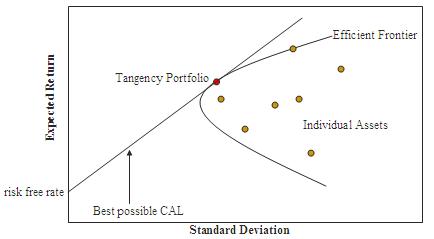
This is going to totally shake the entire education sector. Schools not on the efficient frontier, especially those primarily focusing on teaching rather than research, are in the real danger of extinction.
Pretty soon, students will start to ponder between getting course certificates from Stanford versus getting real degrees from lesser schools.

The technology is no longer the issue. Stanford, if it wants, can already dish out an infinite number CS master degrees annually. The real question is prestige; Stanford is valued precisely because it is a scarce resource. How MOOC and prestige will play out remains an interesting event to watch for.


My efficient frontier theory

Filed under: Real — liyiwei @ 1:35 am
Tags: ,

(Look up the term “efficient frontier” if you need, even though I am going to abuse it because I could not figure out a better alternative; “local-maximum” comes close, but it does not catch the multi-dimensional aspect.)

\paragraph{Why}
The world is becoming increasingly fair and competitive; fair in the sense that people now have more equal opportunities than ever to succeed due to technological shifts; competitive in the sense that it is also more likely than ever for the winners to take all.

\paragraph{What}
Position yourself on the efficient frontier for whatever you care, such as school, job, skill set, etc. Otherwise, someone else who can dominate you nearer the frontier will have you for lunch.

\paragraph{How}
It is not going to be easy. Everybody wants to rule the world. But do what you love + strike for the best is probably your best bet. In contrast, trend following will only put you into a crowded competition.

2012-12-11

A gastronomic study of PhD defense

Filed under: Real — liyiwei @ 6:29 am
Tags: ,

🙂

HKU (Hong Kong)

No food or drink served. The candidate gives the talk, the audience asks questions, and the jury members discuss the final fate behind the door. The entire thing is over in about an hour.

Stanford (USA)

The reception food quality determines whether you pass, but do not serve coffee, as it can make jury members unnecessarily aggressive. The rest is similar to above.

INRIA (France)

The jury members meet for lunch in a nice restaurant (French, of course). The talk, QA, and jury discussion parts are similar to above. After that, a fancy reception is served (Tunisian pastry in my case). And if you, as a jury member, do not ask for trouble during the defense, you get invited to dinner in an even nicer restaurant (French, course). The entire thing takes about 11 hours.

« Previous Page — Next Page »

Theme: Rubric. Get a free blog at WordPress.com